From Upon Appleton House by Andrew Marvell 1651 (quotation painted on the Great Stair at Upton Cresset by artist, Adam Dant)
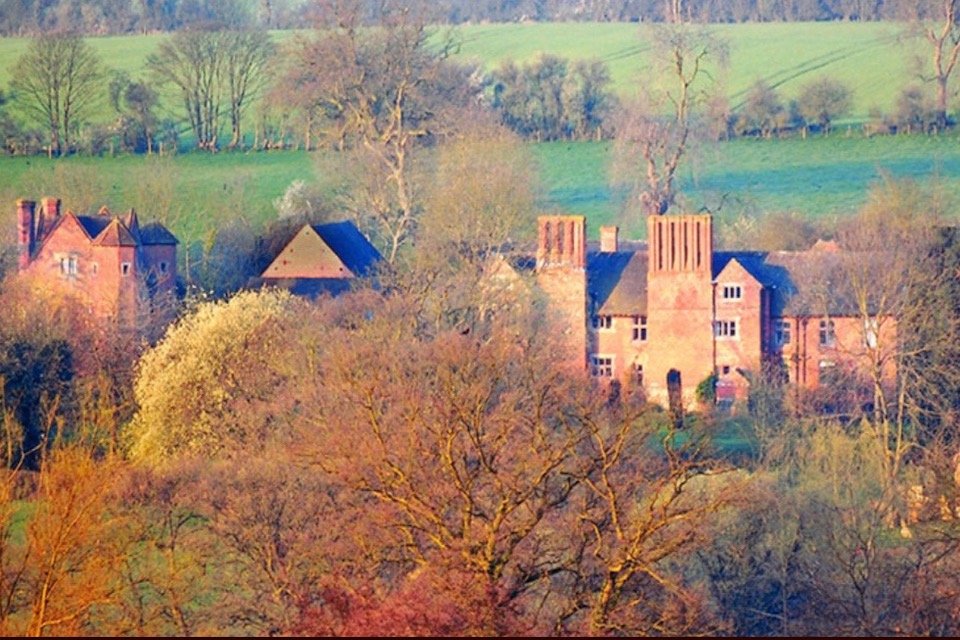
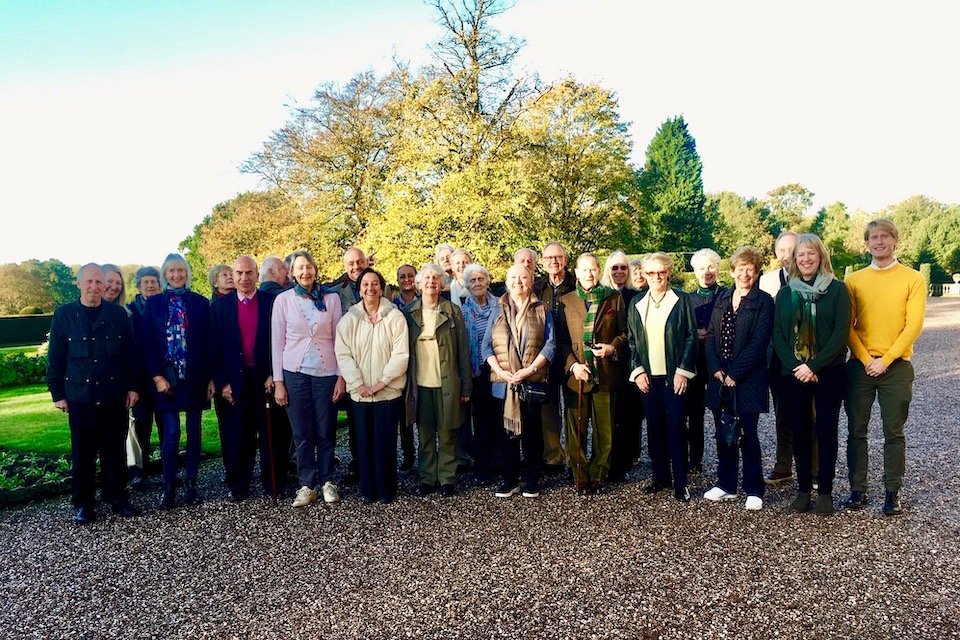
In October 2017 I was privileged to take a group of 30 guests on a 5-day tour of some of Shropshire’s most intriguing houses, one of which was Upton Cressett, one of the finest Tudor manor houses in the county.
Short Recent History of Upton Cressett
The house had been left deserted for decades when, in the light of a late summer afternoon, Sir John Betjeman and the artist, John Piper,
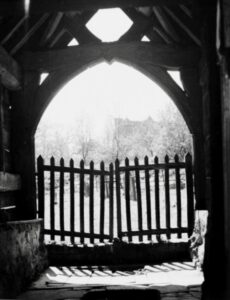
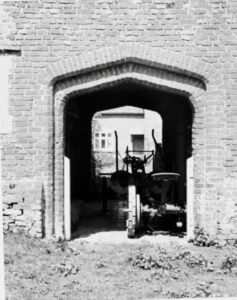
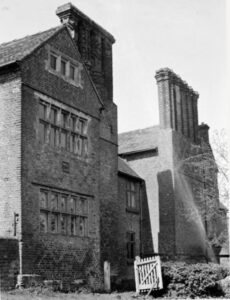
arrived and peered through the gates to see what they could through the overgrowth. Betjeman wrote that Upton Cressett ‘is best approached on foot, horse or bicycle; only so can its peace and various landscape be appreciated. The road to it stops at what was once the manor of Upton Cresset…An orchard surrounds the disappeared Tudor brick gatehouse with towers at its corners and stone dressings to the windows’. The church of St. Michael, next to the house, was also photographed by John Piper with Betjeman writing of its ‘rich Norman chancel arch and south door, and a little late Flemish glass’.
Several years after the Shropshire Shell Guide was published in 1951, Nikolaus Pevsner visited Upton Cressett in the late 1950s for his Shropshire edition of The Buildings of England. Despite its derelict and overgrown state, he described it as a ‘remarkable Tudor house of brick’ that deserved more academic study.
“My wife and I recall the group of RA Friends’ visit to Upton Cressett, as organised by Sue Stamp, with great pleasure. Adam Dant was on hand to give a guided tour of his remarkable set of eight murals around the house and gatehouse and the group had the chance to be the first to see the extraordinary new gilded mural in the Gatehouse, called ‘The Journey of the Mace’. It tells the story of Parliament from Norman times to today and has been dubbed the Bayeaux tapestry of Shropshire by the press.
We had a lunch in our Great Hall ( as painted by Adam) and tea in our medieval tea tent. Upton Cressett isn’t as grand as many of the other places that the group visited on their trip to Shropshire but members seemed to enjoy the hidden away location and intimacy – and the fact it was led by Adam and myself. The visit even appears in my restore-a-wreck memoir, Restoration Heart, (Little, Brown) which tells the 50 year story of the restoration of Upton Cressett – it was a highlight of our year and we hope to welcome back more cultural tours and guests interested in heritage and a good lunch.
Of course this season is looking bleak but we are using the cancelled early season to make improvements to the grounds and some re-decorating. The old medieval wood is being cleared and you can hear the sound of chainsaws and the smell of bonfires as we burn the rotten wood and forest of nettles’. – William Cash, Upton Cressett
The Spitalfields-based artist Adam Dant has kindly sent me his remembrances about our visit to Upton Cressett while he was there to officially reveal his new artwork:
“The Visit of 30 friends and patrons of the RA to Upton Cressett Hall with Sue Stamp, fortuitously coincided with the unveiling of my newest wall painting there ‘The Journey of The Mace’.
The gilded and blackwork frieze I created, depicts The Journey of The Mace which depicts significant scenes in the life of the mace, dating back to its arrival in England as a device to display sovereign judicial power to its symbolic role in the historic decision of the British electorate to return certain sovereign powers from the European Parliament and Courts to those of the UK following the result of the 2016 Referendum.
The frieze is located on a panel inside the open covered arch of Upton Cressett’s Tudor gatehouse. The panel would have originally been decorated with some kind of latin inscription pertaining to the role of the Cressett family as treasurers to the royal court and possibly a covert expression of their Catholic faith.
On the day of the RA friends and patrons visit I enjoyed the opportunity, for the first time, to describe not only the narrative of the frieze, including stories of the English Civil War and Upton Cressett’s part in the national conflict but also the process of creating and executing the painting. Following this talk the work of art was officially unveiled by Lady Cash in the presence of all for the benefit of local press and dignitaries.
‘The Journey of the Mace’ is just the most recent in a series of artworks commissioned as part of a suite of decorative, narrative painted interiors for Upton Cressett Hall. As part of the restoration of the main hall I was initially charged with coming up with a scheme which might unite the history of the place, the Cressetts and the Hall’s current use as a family home.My task started in the grand Dining Hall with it’s huge fireplace and after an intense period of research into the lost art of English domestic interior wall painting I created a loose grammar of designs which by fusing an historically authentic approach to the physical task ahead allowed for the co-existence of past and present. The process also involved my learning to recreate the recipes of Tudor era ‘cassein’ paints, some of which proved quite odiferous.
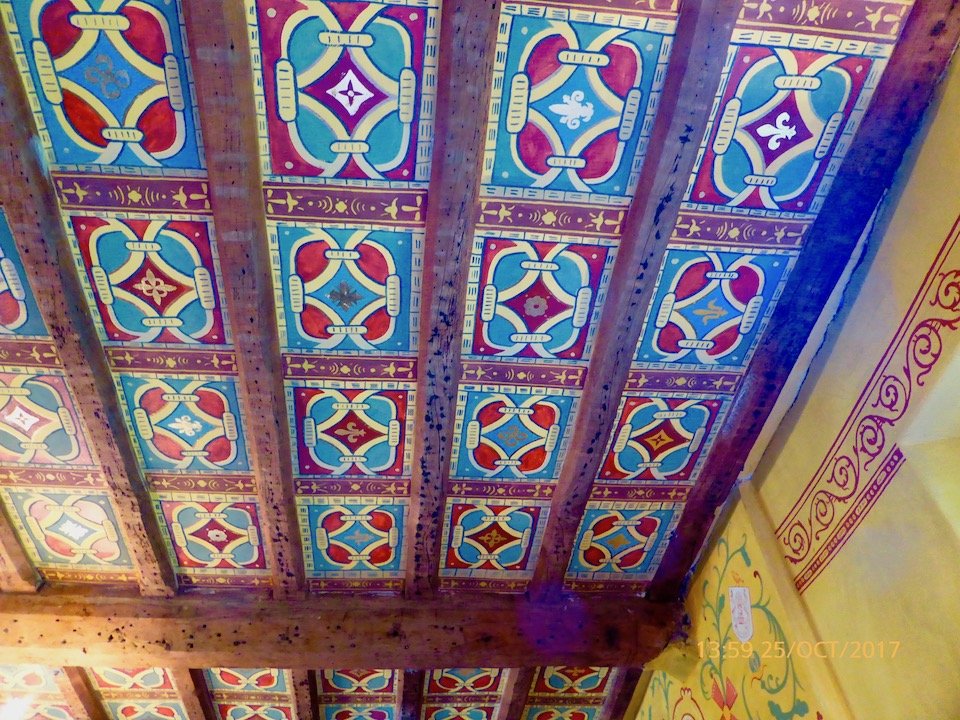
Sue Stamp’s guests were led on a journey through the house which described my engagement with the place as an artist. From the Dining Hall with its faux coffered ceiling ( hiding concealed secret code ) and sea serpent motifs up the verdigris strapwork augmented staircase with stories and images of revival and rejuvenation to a ‘blackwork’ frieze in the eaves of what was the original medieval double story Hall. This ‘blackwork’ frieze uses a typically Jacobean device by setting a tale from classical myth, in this case the abduction of Helen of Troy and subsequent wars, within the recognisable surroundings of a house and it’s locale. Thus the wooden horse arrives at Upton Cressett’s gatehouse and the famous ‘Cressett Crib’ appears as a backdrop to the Judgement of Paris.
I recall that the visit ended with tea and cake served in a medieval field tent in the grounds of the Hall with visitors exploring the moat and the small chapel of St Michael where several of the Cressett family are buried. There is supposedly a secret tunnel which connects the crypt of the chapel with the gatehouse, but none of the visitors managed to find it.” – Adam Dant, Artist – May 2020
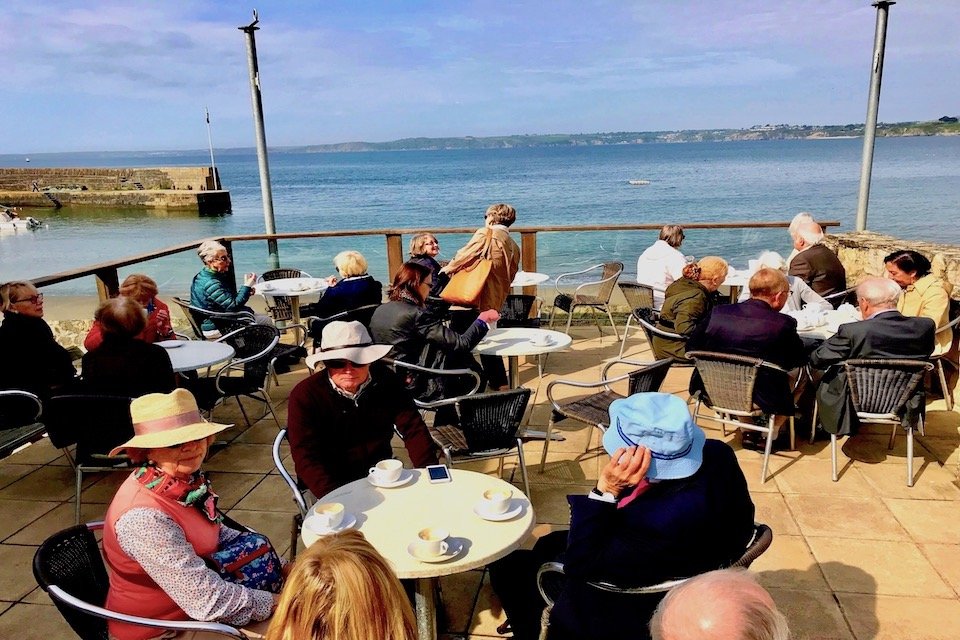
Another sunny morning and we set off full of anticipation on our journey to visit Menabilly, the privately owned house (not open to the public) on which Daphne du Maurier based the location of Manderley, in her haunting novel Rebecca. We stopped off at The Rashleigh Arms for coffee and shortbread on the terrace, before our coach drove us slowly along the meandering drive to the house. We had a very special visit looking at photos and paintings from the time Daphne and her family lived there between 1943-1966, followed by time to wander in the grounds and venture along the path leading down to the sea.
Image credits: courtesy of Upton Cressett/William Carr / With thanks to Tate online archive images from John Piper collection / other images – Sue Stamp
“If only there could be an invention that bottled up a memory, like scent
And it never faded, and it never got stale. And then, when one wanted,
the bottle could be uncorked, and it would be like living the moment all over again.”
– Daphne du Maurier
Glorious Cornwall, how we love that beautiful county of cream teas and clotted cream, stunning coastline and mild maritime climate. During this time of lock-down, we can’t travel to Cornwall in person but we can be reminded of happy times there. I hope you enjoy these highlights of a memorable trip I organised there for 30 guests in May 2018.
Amongst the places we visited were; Boconnoc House, the Lost Gardens of Heligan, Antony House, Daphne du Maurier’s ‘Manderley’ and the stunning Tregothnan Estate, believed to be the first place to grow ornamental Camellias in Britain (200 years ago) and still the only place in England growing and exporting tea.
We arrived for our tour and private dinner at Boconnoc to be warmly greeted by the owner, Elizabeth Fortescue, and with the stunning Georgian facade of the house basking in the late afternoon sunshine.
“This magical house sits in one of the most beautiful settings in Cornwall and was crying out to be restored and used. It is wonderful to see it come back to life and to see the important painted staircase influenced by Soane so carefully respected in its restoration.” – James Stourton, former Chairman of Sotheby’s UK
In 2000 Elizabeth and her late husband Anthony, embarked on a major 12 year refurbishment of the house, restoring Soane-inspired features and introducing stylish contemporary interiors. The project won the HHA/Sotheby’s Restoration Award 2012.
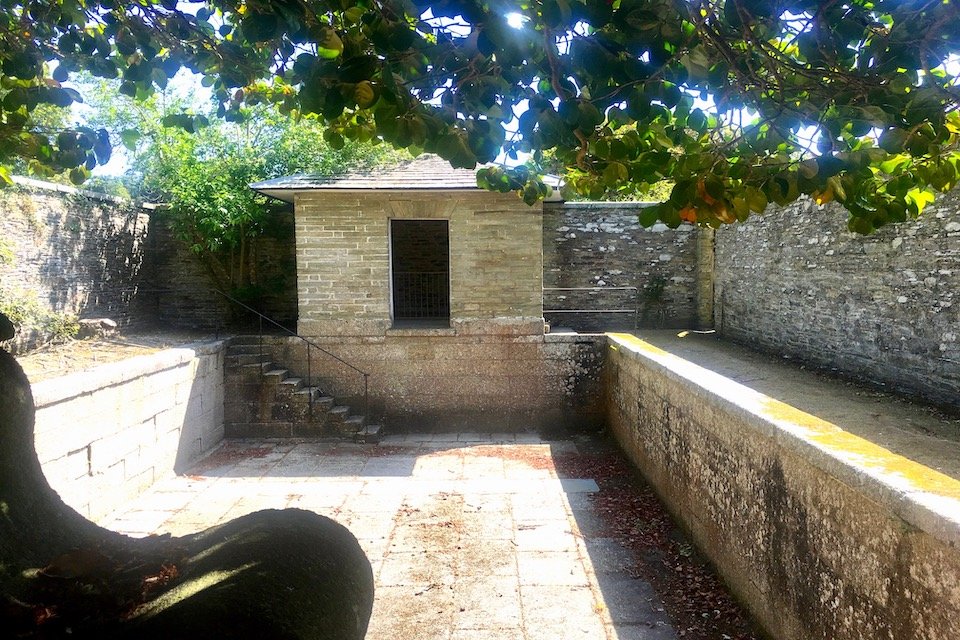
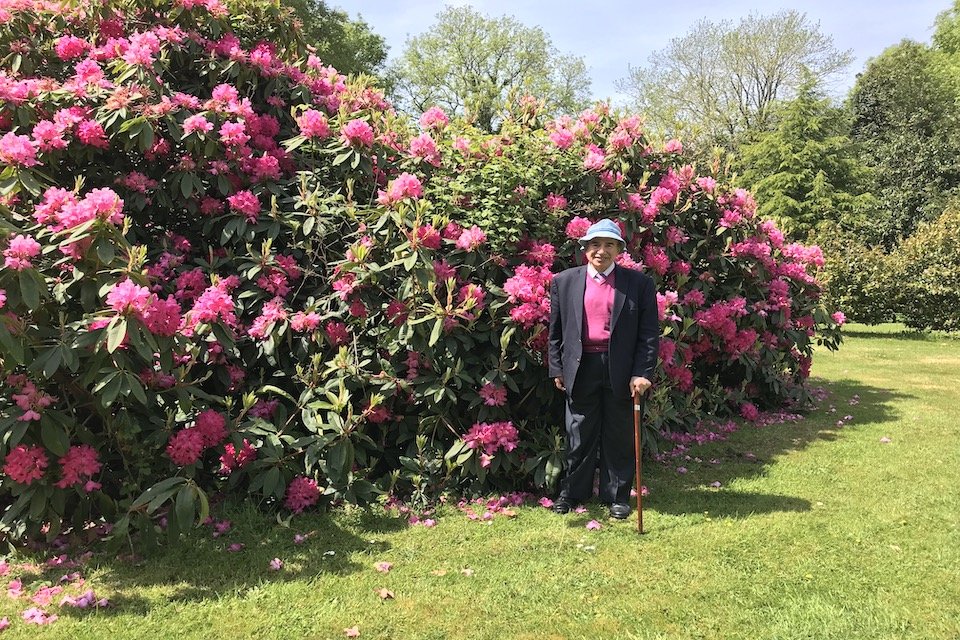
Elizabeth treated us to a tour around the house and the grounds which included the intriguing Georgian Bath House and gardens blooming with colourful rhododendrons. Following a relaxed glass of champagne in the Drawing Room the group enjoyed a private 3-course dinner in the Orangery – totally delightful.
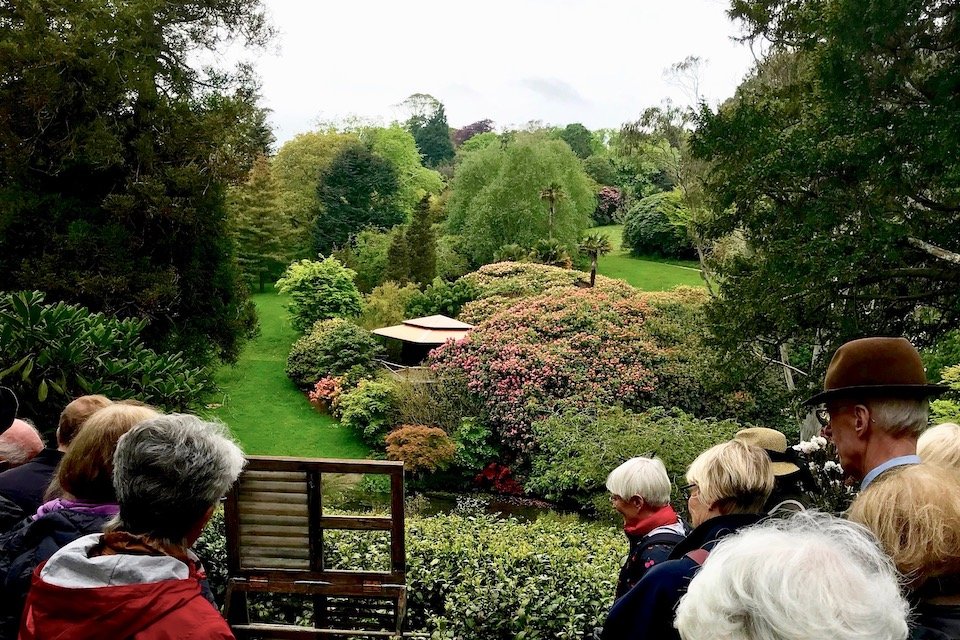
The Lost Gardens of Heligan in Pentewan, near St Austell is somewhere you must put on your list if you haven’t visited already. Lost to the brambles of time since the outbreak of WW1, the 200-acre gardens were re-awakened in 1990 to become Europe’s largest garden restoration project. In August 1914, the 22 gardeners that managed the gardens for the Tremayne family, went off to fight in WW1. They left a message, still visible on an old wall today ‘Don’t come here to sleep or slumber’ – signing their names beneath the motto. Most never returned and the gardens were left unattended to grow wild until 1987 when a team of enthusiasts, led by Dutch archaeologist, Tim Smit, discoverd a hidden door that opened into the jungle that became The Lost Gardens of Heligan … the rest is history.
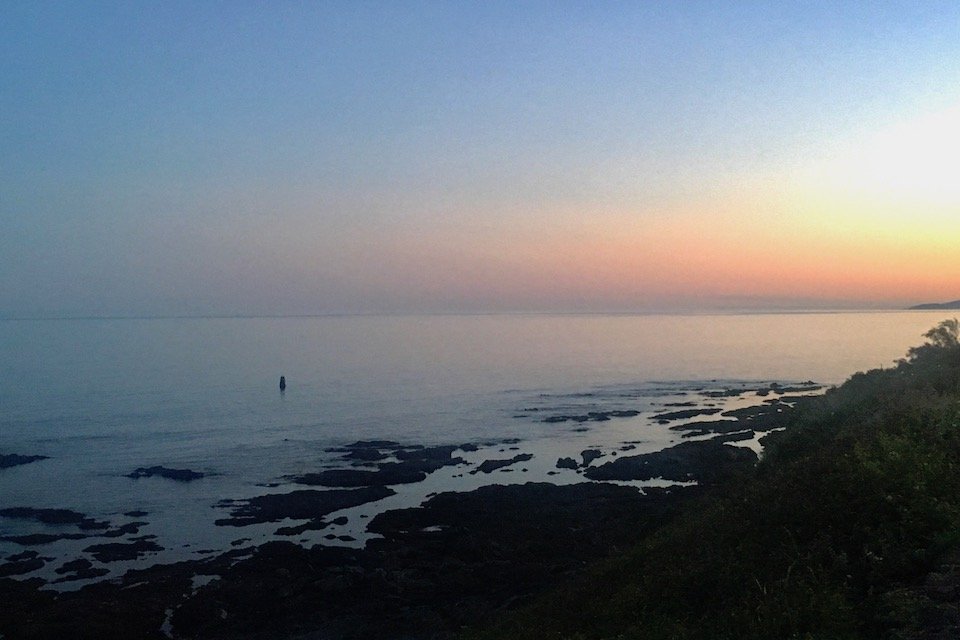
AntonyHouse Antony House, near Torpoint, is one of my favourite Cornish houses for two reasons; firstly it is only five miles from Portwrinkle (see my photo of sunset over the sea at Portwrinkle June 2017) where my family and I spent holidays for over 40 years) and also because it is the home of Sir Richard Carew Pole, Trustee of the RA Trust and a lifelong philanthropist. Built between 1711-1721 for Sir William Carew Pole, the house contains a fine collection of paintings and treasures including a portrait of Charles I at his trial. Sir Richard gave us a private tour around the main rooms which are richly panelled with Dutch Oak. The magic of Antony was captured by director Tim Burton, as a film location for his blockbuster, Alice in Wonderland.
Another sunny morning and we set off full of anticipation on our journey to visit Menabilly, the privately owned house (not open to the public) on which Daphne du Maurier based the location of Manderley, in her haunting novel Rebecca. We stopped off at The Rashleigh Arms for coffee and shortbread on the terrace, before our coach drove us slowly along the meandering drive to the house. We had a very special visit looking at photos and paintings from the time Daphne and her family lived there between 1943-1966, followed by time to wander in the grounds and venture along the path leading down to the sea.
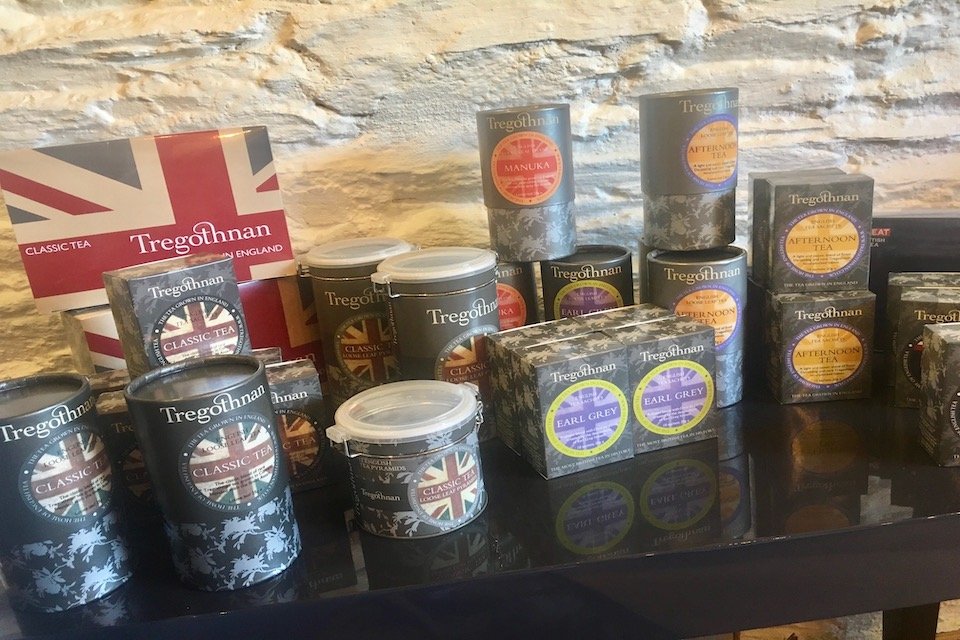
Tregothnan Estate As a private botanic garden and arboretum Tregothnan is unequalled, offering a diversity of plants and trees, rare collections, sweeping vistas and peaceful secluded groves. The estate enjoys a special sub-tropical climate where hillsides of tea bushes (camellia sinensis) have produced the UK’s only home-grown crops of tea since 2005.
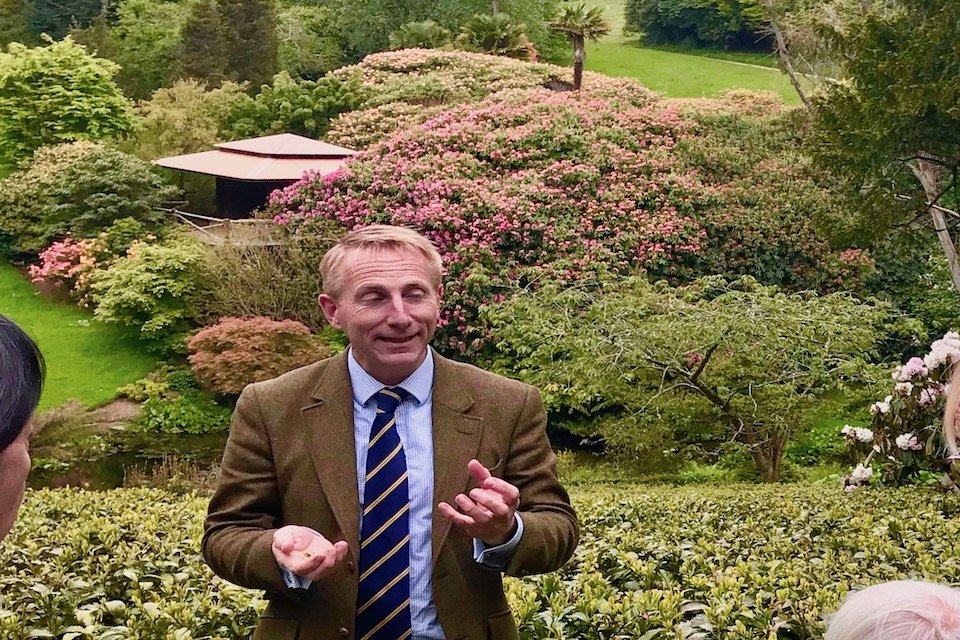
I had arranged for Jonathon Jones, the managing director at the estate (and former head gardener) to give us a personal tour. The sun was beating down on the glorious Himalayan Valley (see below) and the group enjoyed hearing the story of how the plantations came about following Jonathon’s many visits to plantations around the world and the knowledge he acquired while doing so. Naturally, after our tour, we enjoyed scones with jam and clotted cream and, of course… lashings of freshly brewed (and homegrown) tea!
You may like to know that during this period of Coronavirus lockdown, online sales of Tregothnan tea (and associated goodies) have sky-rocketed with 12 times as much business as normal. Usually they sell to upmarket stores such as Fortnum and Mason but Jonathon says: “I think people are consoling themselves with a cup of tea. People are video talking to each other and having a cup of tea online. We don’t know what’s going to happen in life, we hope that people will get back to drinking tea together but we don’t know when that will be.”
If you’d like to browse their selection of teas, honey and other products please see here
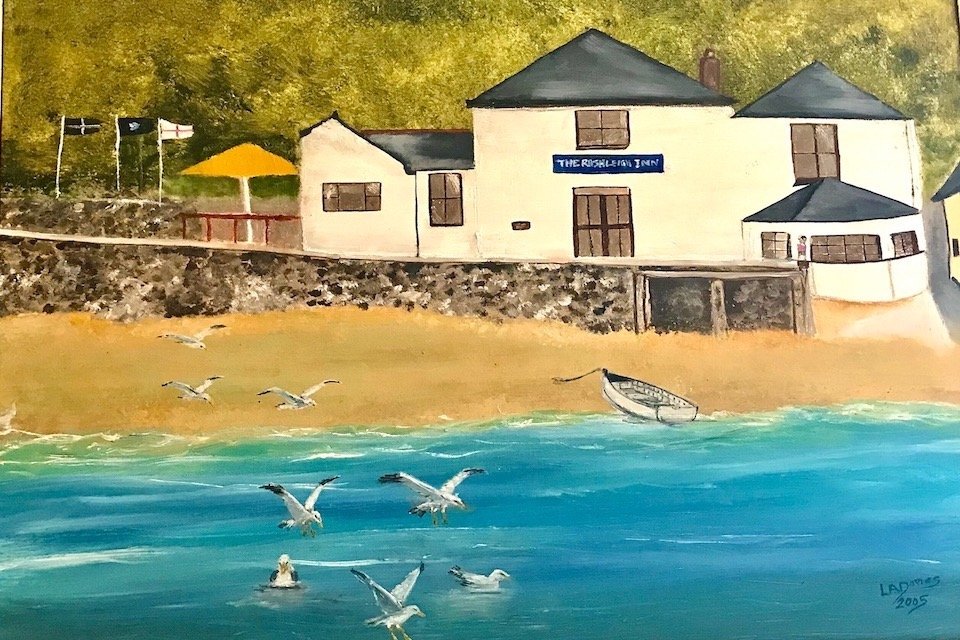
Image credits: Painting of the Rashleigh Arms is by J.A. Davies/photo of Jonathon Jones with cup of tea c. Jim Wileman/other images Sue Stamp
I marvel whether I shall ever see the like again!”
– Benjamin Disraeli, 8 June 1878
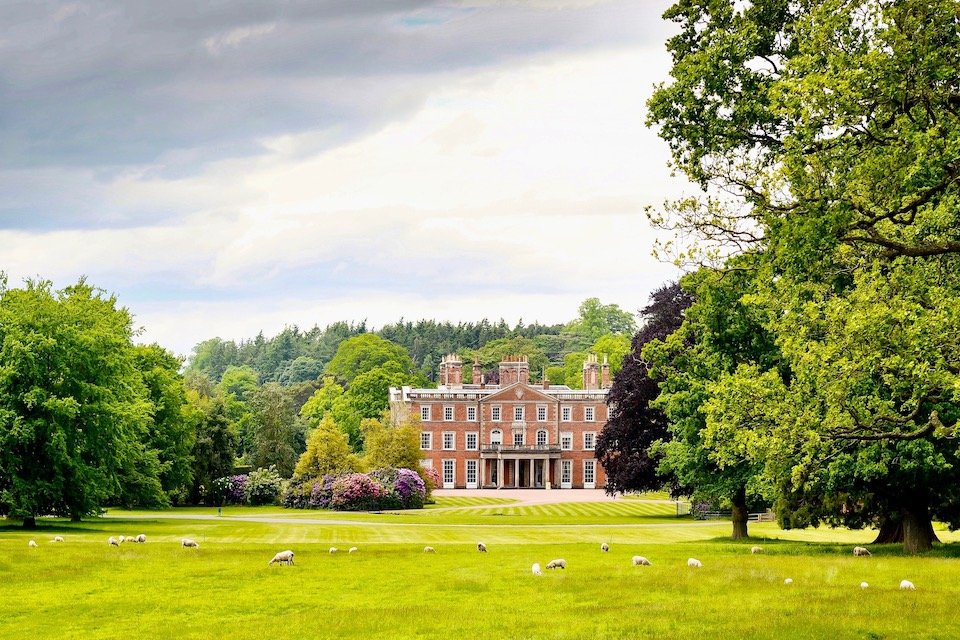
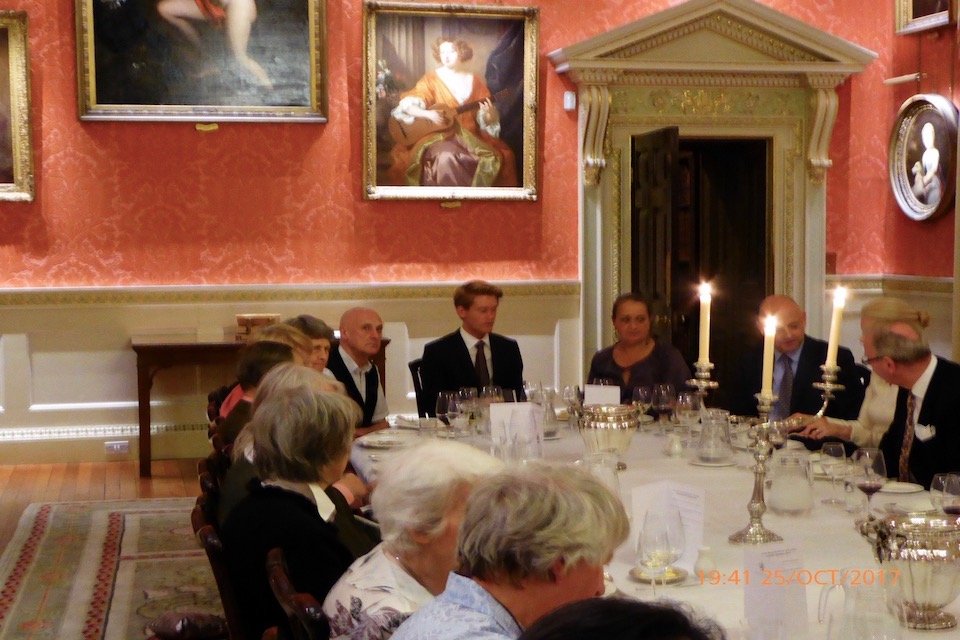
I have had the good fortune and privilege to twice take groups to stay and dine at the beautiful stately home, Weston Park in Shropshire. Mostly we visit stately homes to view their magnificent state rooms and collections and then, sadly, have to leave again. However, at Weston Park we were actually the house guests, staying in beautiful bedrooms and enjoying dinner in the magnificent dining room where the walls are lined with works by Van Dyke, Gainsborough, Reynolds and Stubbs.
From medieval times the house was owned by the family of the present Earl of Bradford. In 1986 he gifted the house with its stunning collections and 1000 acres of ‘Capability Brown’ parkland to the nation, all of which are now vested in the capable hands of the Weston Park Foundation, an independent educational and conservation charity.
During both our stays at Weston Park we were deliciously looked after by the wonderful Barry (the Butler) and his team, and treated to owner-led tours of some of the most interesting and historic private houses in Shropshire. On many tours we were accompanied by the Curator & Head of Learning at the Weston Park Foundation, Gareth Williams, who added his deep knowledge and appreciation of art and architectural history to each visit.
I am delighted to share Gareth’s thoughts about our two visits and about the quietude of the house, closed up for the duration of the current lock-down.
“Weston Park was delighted to welcome Sue Stamp and her travellers for their memorable residential cultural tours of Shropshire in October 2017 and July 2018. The House at Weston, with its renowned art collection that, in turn, sits within a radius filled with some fascinating but very private houses, became wonderfully animated by the group’s presence.
Places like Weston Park were never intended to be simply a museum of great paintings and objects but were designed expressly as places of hospitality and so what better than for the House to host an erudite group who enthused about the Old Masters hanging on the rooms’ walls, the furniture by different generations of royal makers or the eighteenth and early nineteenth century ceramics? For the House, now owned by the independent charity the Weston Park Foundation, the group brought life in every sense, and also knowledgable and pertinent observations about the indigenous collections that fill every room.
External house owners, such as Lord and Lady Forester, who hosted lunch at their rarely-open Willey Park – the masterpiece of architect Lewis Wyatt – relished the opportunity of sharing enthusiasm for their house with Sue’s group. The group were also able to appreciate the inspiration that Shropshire’s country houses give to creativity, in seeing a demonstration by scagliola* maker Thomas Kennedy at his early eighteenth century Acton Round Hall. ( * scagliola is a man-made material made of plaster mixed with glue and dyes which is then painted or polished to emulate the look and texture of marble.)
Shropshire is full of fascinating houses of high quality, all with stories to tell. At the time of writing, Britain is in lock-down for Covid 19 and many of these, including Weston Park, are silent whilst spring creates scenes of magic in the garden and park beyond. Weston should be buzzing with visitors enjoying the spring weather and preparing for the onset of a diverse range of events which bring enjoyment and, for the charity, a vital source of much-needed income which heritage has a relentless appetite for, that no lock-down can pause.
Instead of hosting jollity and laughter, the rooms with their matchless contents, are hushed and have been put to bed, with dust sheets over chairs where guests might sit and acid free tissue protecting the fragile contents. To walk them is a surreal experience knowing that the House was never intended to be like this and that this painful quietude cannot sustain what we all care about. The team are keeping a close and careful eye over the place but, like some fairy tale castle, the House longs to reawaken and extend its warm welcome to guests.”
– Gareth Williams – Curator & Head of Learning, The Weston Park Foundation
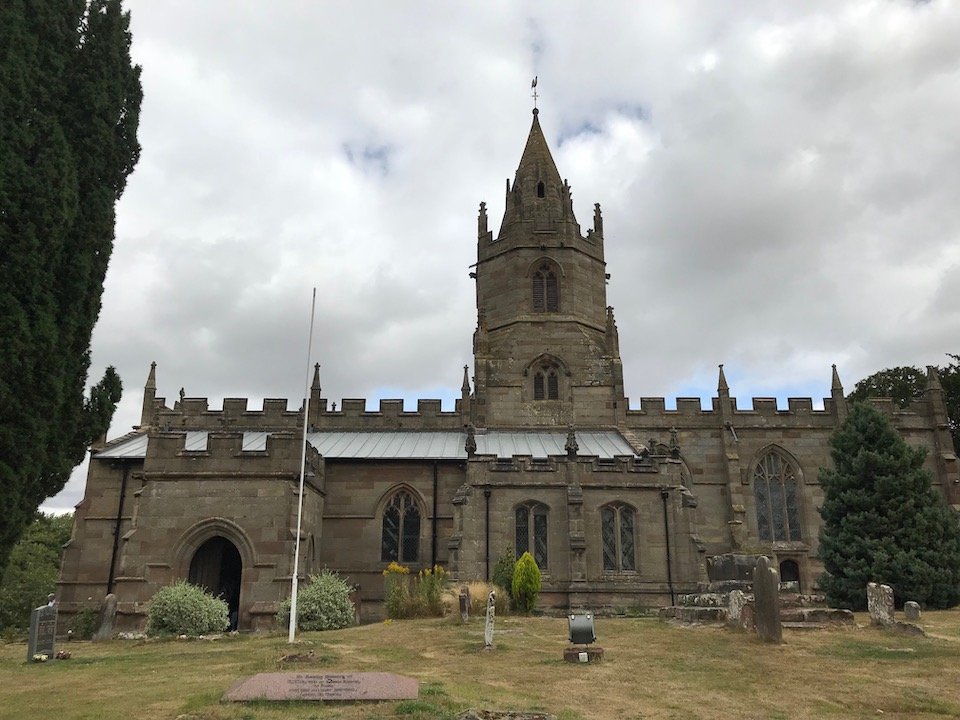
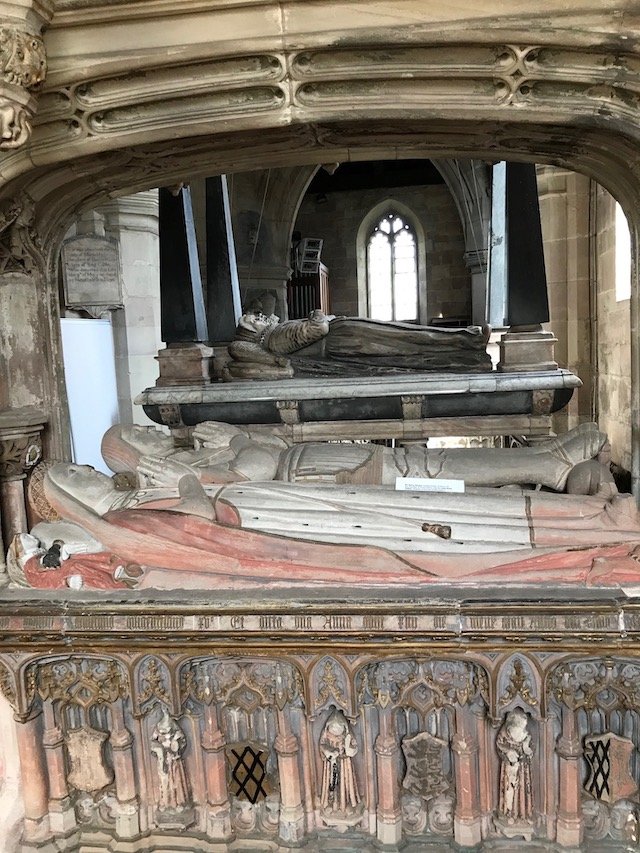
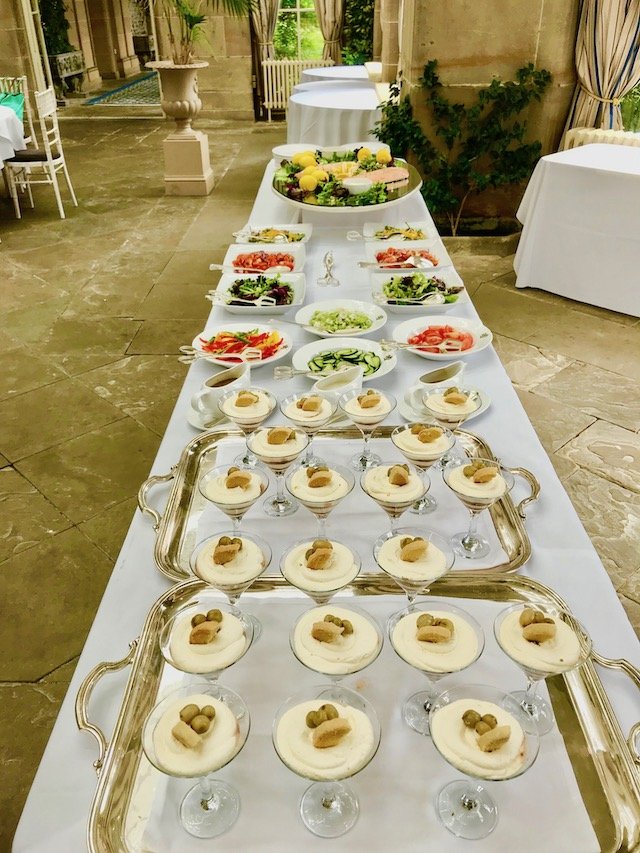
During our two-night stay at Weston Park in July 2018 we also took a spontaneous visit to the nearby St Bartholomew’s Church at Tong, and were in awe of the stunning tombs and monuments it houses. On our final morning we took a delightful walking tour around the grounds with the Head Gardener followed by a summery buffet lunch in the Orangery of cold salmon, salads, lemon posset and a glass of wine. The perfect end to a perfect stay!
I am hoping very much to take another group to Weston Park in the summer of 2021 – watch this space! https://www.weston-park.com/
Image credits: Main image of house – courtesy of the Weston Park Foundation/images of church – Andy Kennedy and the others – Sue Stamp
“A spirit of pleasure and youth’s golden gleam; And think ye not with radiance more sublime For these remembrances, and for the power They had left behind.”
– William Wordsworth, The Prelude, Book 12 lines 262-269
Rydal Mount was the Wordsworth’s family home from 1813 until William’s death in 1850 at the age of 80. Today (7th April 2020) is the 250th anniversary of his birth and it is 50 years since Wordsworth’s descendants (who still own the house) opened the house and gardens to the public.
In September 2019 I organised a five-day tour to the Lake District. Despite a day of torrential rain, we spent a wonderful afternoon at Rydal Mount enjoying a private tour of the house and gardens with the curators of the house, Emily and Matt, who then treated us all (30 people) to a delicious cream tea in Wordsworth’s Drawing Room. I’m delighted to share the following message from Emily on this special 250th anniversary of Wordsworth’s birth:
“As most of us sit in our houses in isolation in order to keep healthy, perhaps now is a time to reflect on how life affirming group gatherings can be. Connecting with others in person can be a source of shared memories and moments. At such a time as this, when we’re separated by quarantine, these memories can sustain us, and also remind us of what we can look forward to once again, when we’re through this experience.
A wonderful memory from the summer of 2019 was when Sue Stamp and her group came to visit Rydal Mount. It was an abysmal afternoon in late summer. Gloomy skies, gusts of chilly wind and vicious daggers of icy rain greeted the group as they arrived. Some were hardy and went for a soggy, windblown tramp around the garden; others wisely chose to sit that bit out and thaw out in the Drawing Room.
Tables were set up in the Drawing Room and we laid on pots of tea, scones, jam and clotted cream. Spirits seemed to rise at this and soon the sound of happy chatter started increasing in volume.
We gave a summary of what to look out for in the house: William Wordsworth’s letter declining the position of Poet Laureate; his brother John’s sword, rescued from the wreck of The Earl of Abergavenny in which John sadly lost his life; the Dining Room chairs embroidered by Dorothy Wordsworth, Mary Wordsworth and Sara, Mary’s sister who also lived in the house.
Since this visit, Rydal Mount has received many new Wordsworth treasures from another branch of William’s direct descendants – items that belonged to William while he lived at Rydal Mount and unseen by the public until now. Of note is the Sir William Boxall portrait of the Poet, the study of which is in the National Portrait Gallery, the Wordsworth family bible and many Beaumont paintings (Beaumont was one of the founders of the National Gallery and a patron of Wordsworth).
William Wordsworth himself knew the value of connecting with family, community and the wider world at large. Rydal Mount was an open house and the list of visitors he received during his 37 years of living there is long and illustrious (among others: Charles and Mary Lamb, William Wilberforce, Nathanial Hawthorne and Emerson).
We are looking forward to re-opening the house and gardens to visitors, and groups, as soon as we’re able, so that they are able to experience the special, creative atmosphere of Rydal Mount for themselves.
In the meantime, we will be celebrating the 250th Anniversary of Wordsworth’s birth online. Please keep an eye on our social media (https://www.facebook.com/WordsworthRydalMount/ Instagram @rydalmountwordsworth and twitter @Rydal_Mount to see what we’ll be up to.” – Emily Heath, Curator
Image credits: Main image of house – taken by Joe Wainwright/ other images by Sue Stamp
Quote: William Wordsworth – The Prelude, Book 12, lines 266-269